
Where it all began: the LOLIPOP project comes full circle at the LioniX offices
After four years of collaborative research and technological development, the European LOLIPOP project has officially come to a close. Fittingly, the consortium gathered for its final meeting at the LioniX International offices, the very place where the project kicked off four years ago.
Some projects have a particularly fitting ending.
Four years ago, the LOLIPOP consortium gathered at LioniX International to kick off an ambitious effort to advance photonic integration technologies.
This week, the partners returned to our offices for the project’s closing meeting, bringing the journey full circle.
And between those two meetings, quite a lot happened.
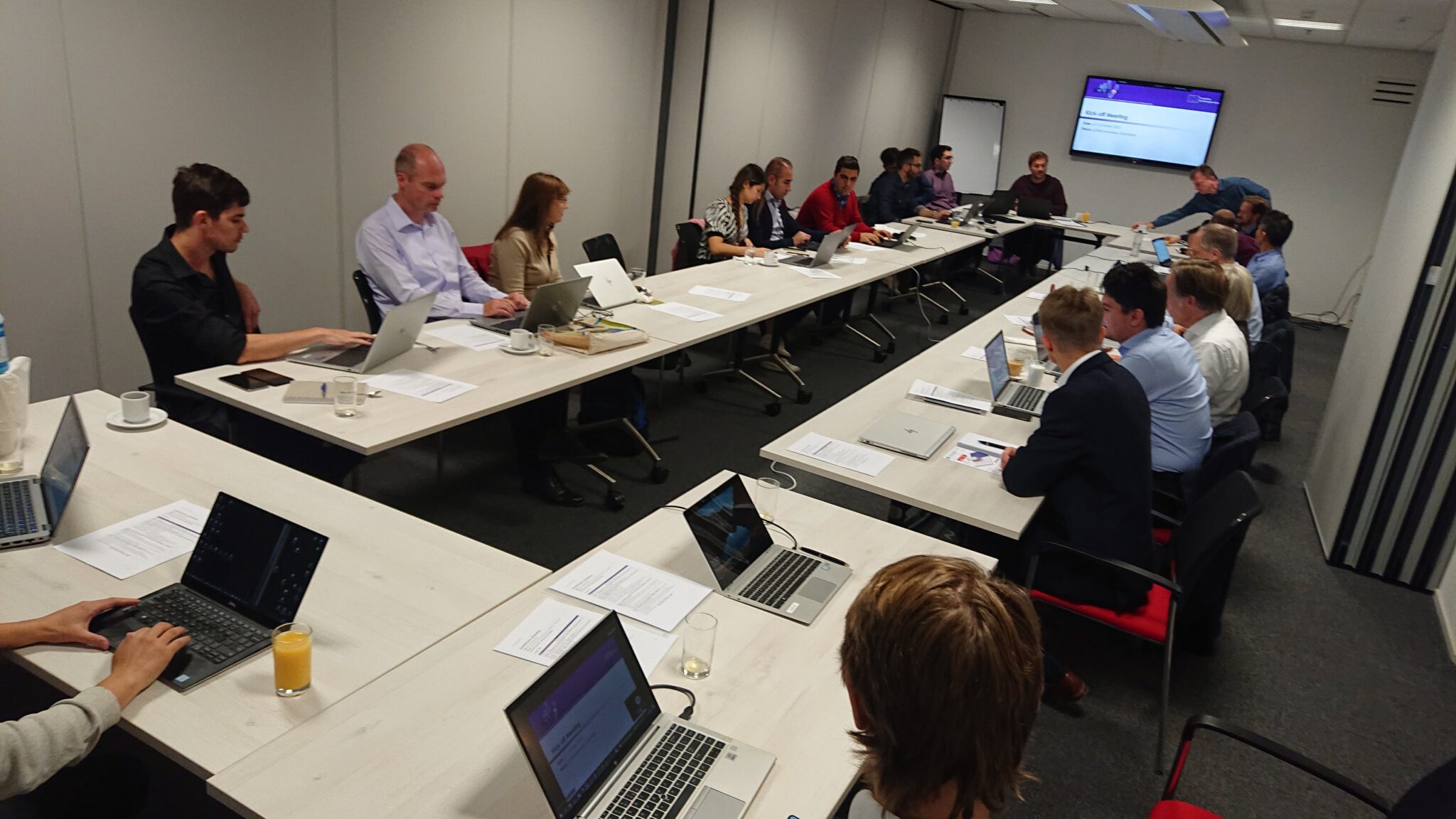
LOLIPOP project kick-off in the LioniX offices 4 years ago
Four years of engineering and innovation
LOLIPOP focused on combining the strengths of lithium niobate and silicon nitride photonic technologies, developing new integration capabilities for applications across the visible and near-infrared wavelength ranges.
For LioniX, the project provided an opportunity to further develop our proprietary TriPleX® silicon nitride platform and expand its capabilities through hybrid integration with complementary photonic materials and components.
Over the course of the project, more than 42 LioniX colleagues contributed approximately 5,800 engineering hours across 46 runcharts, working on a range of technological developments.
Among the key outcomes were:
- External cavity laser technology covering four new wavelengths, expanding the possibilities for integrated laser sources.
- Integration of semiconductor optical amplifiers (SOAs) into external cavity lasers, with a patent application pending.
- Novel grating couplers, resulting in one patent.
- Interfacing of lithium niobate chips, supporting the integration of complementary photonic material platforms.
- Germanium photodiodes in TriPleX® pockets, advancing the integration of photodetection functionality with silicon nitride photonic circuits.
Together, these developments contribute to enabling technologies for sensing instruments, quantum light sources, LiDAR, and neuromorphic photonic chips.
Bringing different photonic technologies together
One of the important aspects of LOLIPOP was exploring how different photonic materials and components can work together within integrated systems.
Silicon nitride offers excellent passive optical properties, including low propagation loss, while materials such as lithium niobate and active semiconductor components provide complementary functionalities.
By developing ways to interface and integrate these technologies, the project has helped expand the range of functions that can be brought together in compact photonic systems.
This work closely aligns with LioniX International’s approach to customized photonic solutions, where material platforms, components, and integration methods are selected according to the requirements of each application.
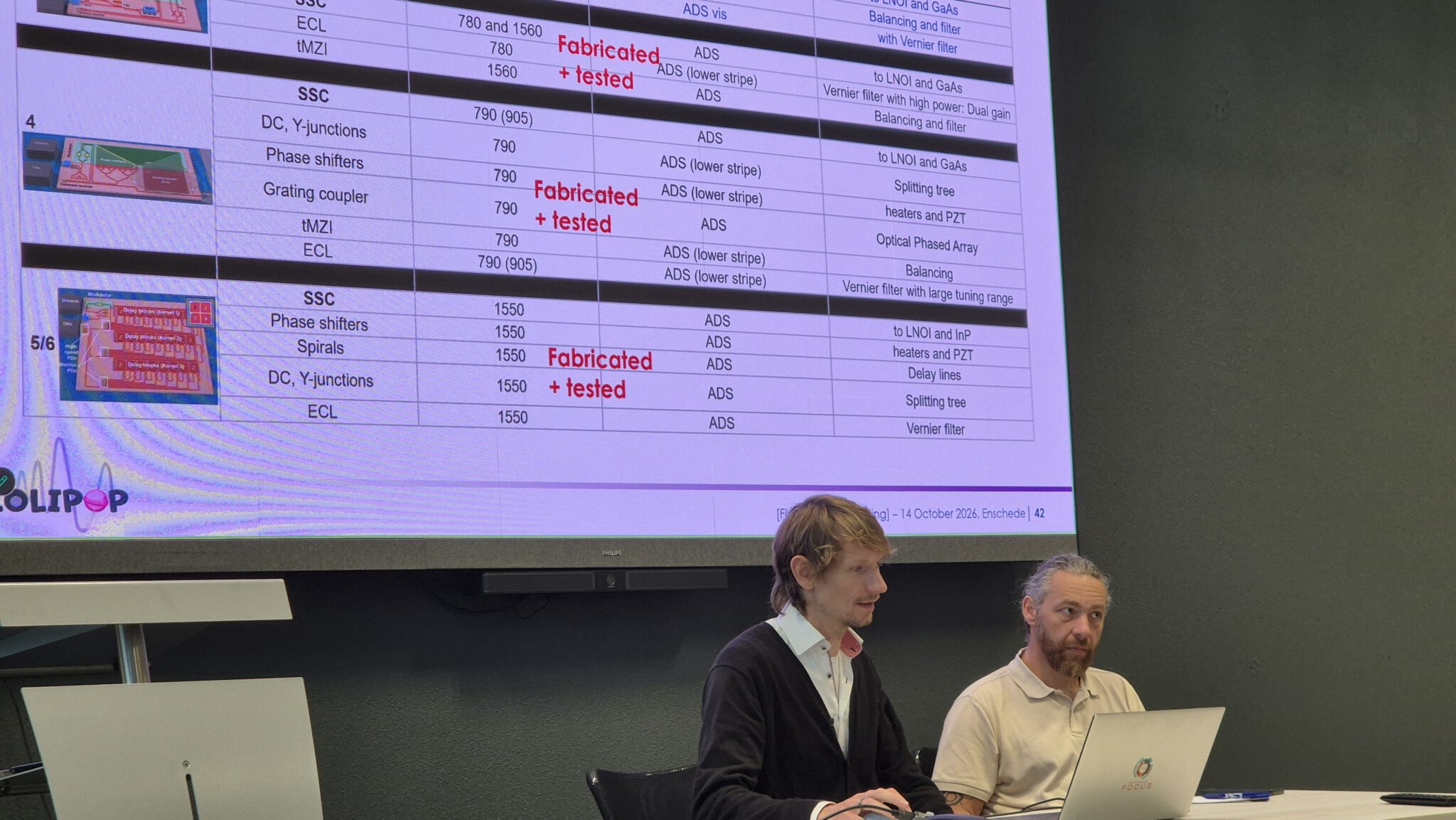
Back where it all began
Hosting both the kickoff and closing meetings gave the conclusion of LOLIPOP special significance for our team.
What began as a shared research ambition has resulted in new technological capabilities, intellectual property, and valuable experience in hybrid photonic integration.
Behind those achievements are the engineers, researchers and project partners who worked together over the past four years, tackling technical challenges and turning ideas into practical results.
We would like to thank all LOLIPOP consortium partners for their collaboration and everyone at LioniX International who contributed to the project.
The LOLIPOP project may have come full circle, but the technologies developed along the way will continue to move forward.
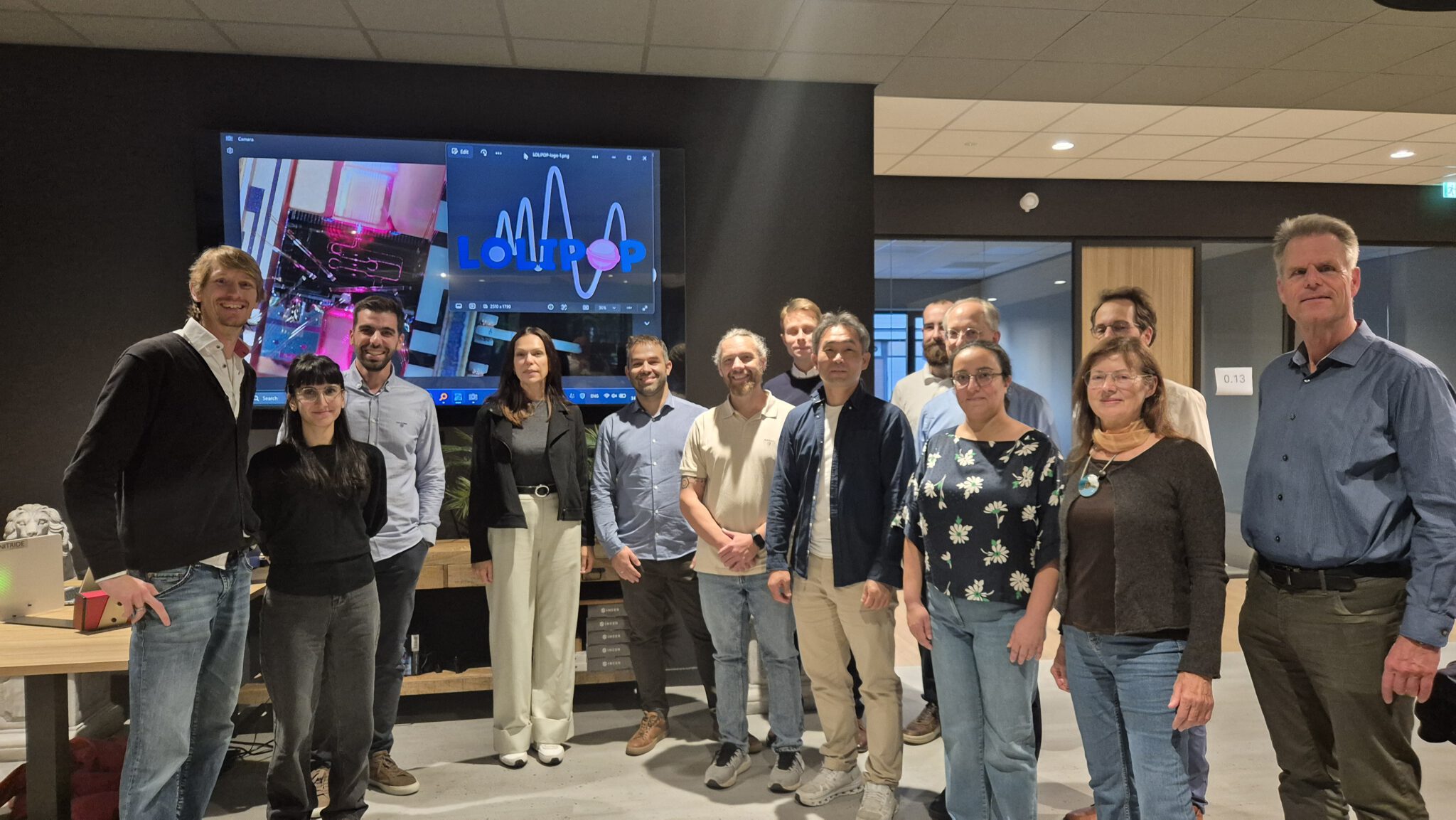
Closing of the LOLIPOP project in LioniX offices
FURTHER INFORMATION:
🌐 Visit the project’s website for all the details of the full objectives and project partners
🌐 Read more about our involvement in the project
